
Discover effective solutions and treatments for panic attacks, including understanding causes and symptoms, with guidance from therapists and self-care practices.
If you are searching for how to stop a panic attack, there is a good chance you have already had one. Maybe your heart started pounding in the middle of a meeting, or you woke up at 2 a.m. unable to catch your breath and sure something was very wrong. So let me start with what I wish everyone knew: panic attacks are terrifying, and they are not dangerous. They are common, they are treatable, and having them says nothing about how strong you are.
A panic attack is a sudden wave of intense fear that shows up in your body, often as a racing heart, sweating, shaking, a tight chest, or trouble breathing, even when nothing around you is actually a threat. Below I walk through why panic happens, the cycle that keeps it coming back, what to do in the moment, and when it makes sense to get support.
Why panic attacks happen
Panic is your body’s alarm system going off when there is no fire. Your brain senses a threat, and your body does exactly what it was built to do: your heart speeds up, your breathing gets faster, your muscles tighten. Those are normal survival changes. The trouble starts when we read them as proof that something awful is happening. According to Mayo Clinic, the exact causes of panic attacks are not fully known, but genetics, major stress, temperament, and changes in how parts of the brain work may all play a role.
A few things tend to make panic more likely:
- Stress load: ongoing pressure, loss, conflict, burnout, or big life changes can leave your nervous system on a hair trigger.
- Fear of body sensations: if you watch your heartbeat, breathing, or dizziness closely, those sensations can start to feel like danger.
- Avoidance: staying away from places where panic happened brings relief in the short term, but it also teaches your brain that those places are unsafe.
- Caffeine, alcohol, and other substances: stimulants, some drugs, alcohol withdrawal, or medication side effects can create anxiety-like feelings.
- Medical conditions: thyroid problems, heart rhythm issues, asthma, and balance problems can mimic or worsen panic, which is why a checkup matters.
You do not need to find one single cause before you get help. What matters more is understanding the cycle, because once you can see it, you can start to interrupt it.
The panic cycle
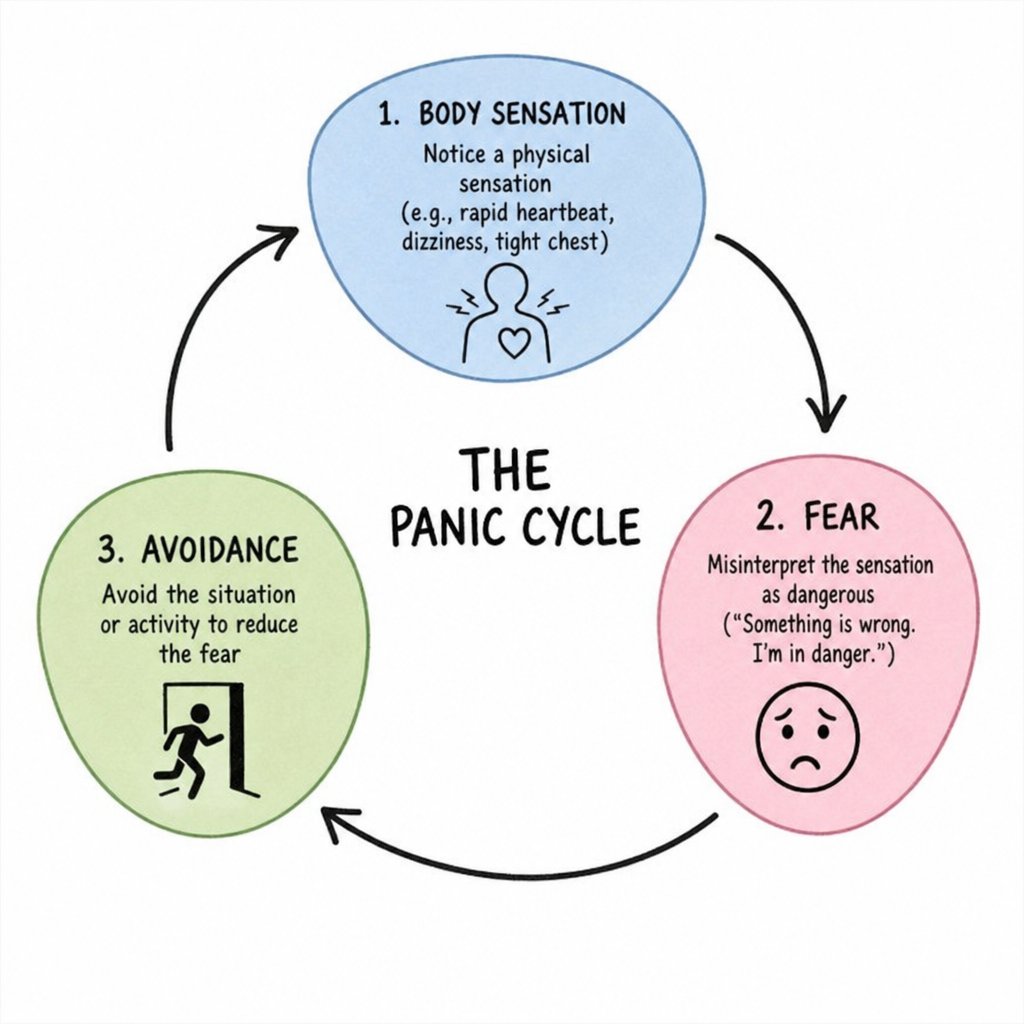
Panic tends to feed itself. You notice a sensation, like your heart skipping a beat. Your mind decides it means danger. That fear makes the sensation stronger, and next time you avoid whatever you were doing when it happened. Avoidance feels safe, but it keeps your brain convinced the threat was real, so the loop starts again.
Wondering whether what you are feeling is panic, anxiety, or just a really hard season? Our free anxiety quiz takes a few minutes and can help you make sense of it. And if you would rather talk it through with a real person, that is exactly what we are here for.
How to stop a panic attack in the moment
Here is the part that surprises people: the fastest way through a panic attack is not fighting it. When you try to force every sensation away, your brain takes that as more evidence of danger. The goal is to ride the wave, quiet the scary thoughts, and let your body learn that this passes on its own. Most panic attacks peak within minutes and then begin to ease.
Six things that help:
- Name it: tell yourself, this is panic. It feels intense, and it will pass.
- Slow your exhale: breathe out a little longer than you breathe in, drop your shoulders, and let your breathing get steadier rather than perfect.
- Come back to the room: notice five things you can see, four you can feel, and three you can hear.
- Stop checking: taking your pulse over and over or searching your symptoms keeps the alarm going.
- Stay if it is safe: if you can, remain where you are long enough for your brain to learn that panic passes without escaping.
- Reach out in a way that builds you up: call someone if you need to, and look for support that helps you trust yourself, not reassurance you need every single time.
One important note. If you have never been checked by a doctor, or your symptoms feel different than usual, get medical care first. Chest pain, fainting, or trouble breathing that does not ease should always be taken seriously. These tools work best once a clinician has helped you understand what is happening in your body.
When to see a therapist for panic attacks
It is time to get support when the fear of the next attack starts making choices for you: skipping the train, turning down plans, avoiding the gym, or sleeping with your phone in your hand. Therapy also helps if you lean heavily on reassurance, feel scared of your own body, or still cannot trust a clean bill of health after a checkup.
The good news is that panic responds really well to treatment. Look for a therapist with experience in anxiety and panic disorder who uses evidence-based approaches like cognitive behavioral therapy (CBT) and exposure work. A good fit will explain the process clearly, move at a pace that stretches you without overwhelming you, and give you skills to practice between sessions. Our anxiety therapists in Chicago work exactly this way, in person in River West or online anywhere in Illinois.
Panic can make your world feel very small. It does not have to stay that way. Learning how to stop a panic attack is a real skill, and you do not have to learn it alone.
Questions about panic attacks
How long does a panic attack last?
Most panic attacks build quickly and peak within minutes, then gradually ease. You may feel shaky or worn out for a while afterward. If attacks keep coming back or last much longer, talk with a doctor or therapist.
Can you stop a panic attack once it starts?
You usually cannot switch it off instantly, but you can make it shorter and less frightening. Slowing your exhale, naming what is happening, grounding yourself in the room, and not fighting the sensations all help. Over time, therapy can make attacks less frequent.
What is the difference between a panic attack and an anxiety attack?
A panic attack is a clinical term for a sudden surge of intense fear with strong physical symptoms. Anxiety attack is not a formal diagnosis, and people use it for anything from building worry to a full panic attack. If you are not sure which you are experiencing, a therapist can help you sort it out.
Is a panic attack dangerous?
A panic attack feels frightening, but it is not physically harmful on its own. Because symptoms like chest pain and shortness of breath can overlap with heart and breathing problems, get checked by a doctor, and seek emergency care any time you are unsure.
Does therapy help with panic attacks?
Yes. Cognitive behavioral therapy, including gradual exposure to the sensations and situations you fear, is one of the most studied treatments for panic. Many people notice meaningful change with consistent work.