
What Trauma Therapy Actually Looks Like

The fear I hear most often about trauma therapy is some version of this: I do not want to go back there.

People imagine sitting across from a stranger and being asked to tell the worst thing that ever happened to them, in detail, in the first hour. If that were what trauma therapy was, avoiding it would be the sensible choice.

It is not what it is. I want to walk you through what actually happens, so you can decide with the real picture in front of you.

You do not have to tell the story to start

This is the most important thing I can say. Good trauma therapy does not begin with the trauma. It begins with you, as you are now: how you are sleeping, what your days feel like, what you want to be different.

You set the pace, and you can say “not yet” to anything. A good trauma therapist will often slow you down rather than speed you up, because opening too much too fast is not brave. It is just overwhelming.

The work usually moves in stages

Many trauma therapists still lean on a three stage model the psychiatrist Judith Herman described decades ago. It is not a rigid sequence, and people move back and forth, but it is a useful map.

The first stage is safety and stabilization. Before going anywhere near the hardest memories, you build steadier ground: tools for when your body floods, ways to come back to the present, a little more sleep, a little less dread. For many people this stage alone changes a great deal.

The second stage is processing what happened, at a pace your system can tolerate. This is where specific approaches come in, and where the memories slowly lose some of their charge.

The third is reconnection: with people, with things you love, with a version of your life that is not organized around protecting yourself.

The approaches you might hear about

EMDR, or Eye Movement Desensitization and Reprocessing, uses bilateral stimulation, like eye movements or tapping, while you briefly hold a memory in mind. It is one of the approaches with the strongest research behind it for PTSD, and it does not require you to talk through every detail out loud.

ACT, Acceptance and Commitment Therapy, helps you make room for hard thoughts and feelings instead of spending all your energy fighting them, so you can move toward what matters while they are still there.

Relational therapy uses the relationship with your therapist as part of the healing. This matters especially for complex PTSD, where the injury often happened inside relationships. Repair tends to happen there too.

Trauma informed care is less a technique than a stance: choice, consent and safety built into every part of the work, so therapy never repeats the feeling of having no control.

Most good trauma therapists blend approaches to fit the person in front of them. You do not need to pick one before you start.

PTSD, complex PTSD, and everything in between

If what you carry traces back to a specific event, the work may move more directly toward processing it. If it grew out of something long and repeated, often in childhood or inside a relationship, as complex PTSD tends to, there is usually more time spent on the foundations: emotions, self worth, trust.

And if you have no idea which describes you, that is completely fine. Your therapist will figure it out with you. Some people never need the label at all.

What to ask a trauma therapist

It is reasonable to ask a therapist how much of their work is with trauma, whether they work with PTSD and complex PTSD, what approaches they use, and how they decide on pacing. You can also ask what happens if a session feels like too much. Their answer to that last one will tell you a lot.

How you will know it is helping

Rarely all at once. More often, you notice in hindsight. A trigger that used to wreck a day only dents an afternoon. You sleep through the night more often than not. A memory comes up and you can think about it without your body going somewhere else. You let someone a little closer than you used to.

Those shifts can seem small. They are not.

If you are ready to begin

At Marra, several of our therapists focus on trauma, PTSD and complex trauma, with training in approaches like EMDR, ACT and relational work. You can meet them on our trauma therapy page. The first step is a free 15 minute consultation with our intake team, who will help match you with the right person. We see clients in person in River West and online anywhere in Illinois.

And if today is not the day, that is okay. This will be here when you are ready.

If you are having thoughts of harming yourself, please contact the 988 Suicide and Crisis Lifeline by calling or texting 988. It is free, confidential, and available 24 hours a day.

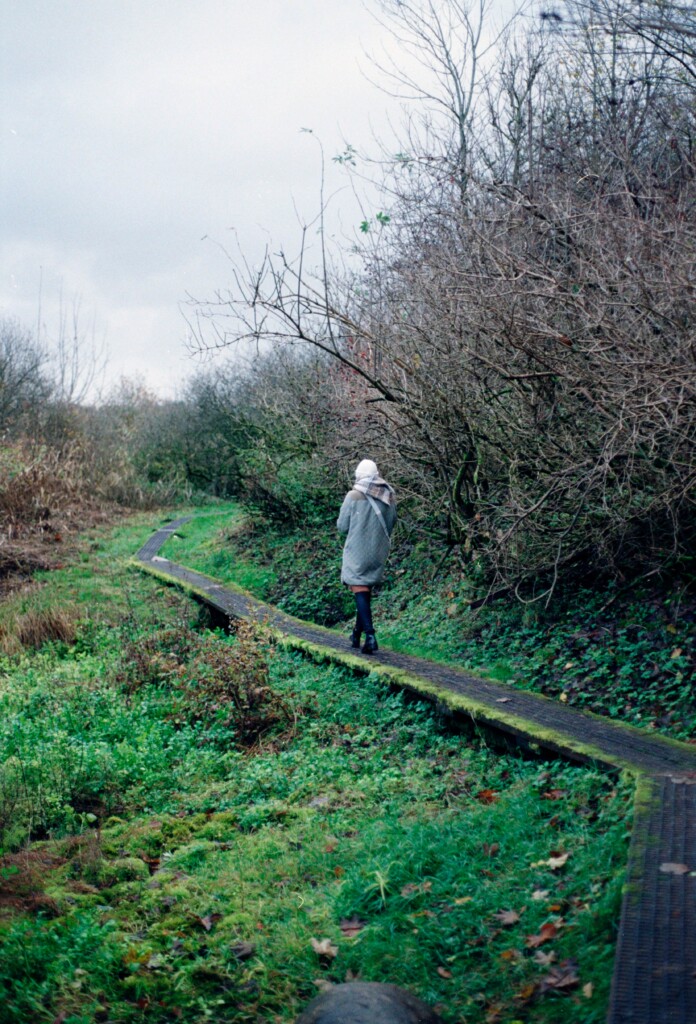
Signs of Trauma That Do Not Look Like Trauma

When most of us hear the word trauma, we picture something dramatic. A flashback in the middle of a crowded room. A war veteran who cannot be around fireworks.

That picture is real, and it is part of PTSD. But it leaves a lot of people out. Many people carrying trauma would never use the word about themselves, because what they live with looks much more ordinary than that. It looks like a personality. It looks like being good at things.

I want to describe some of what it can look like, so that if you recognize yourself, you have somewhere to put that recognition.

Being the one who never needs anything

You handle it. Whatever it is, you would rather figure it out alone than ask. People describe you as independent, and you are proud of that, mostly.

Hyper-independence often starts as a very reasonable conclusion: at some point, relying on someone did not go well, or there was nobody to rely on. So you learned to need less. It works, until it becomes lonely, and then exhausting.

Calm in every crisis, undone afterward

When something goes wrong, you are the steady one. Clear, efficient, almost eerily calm. Then days later, when everything is fine, you fall apart over something small.

That delay is often a nervous system that learned to postpone its own reactions until it was safe to have them. It is a skill. It also has a cost.

Feeling a little far away

You are in the conversation, but part of you is watching from somewhere else. Your body is calm on the outside while something underneath is braced. Sometimes you lose a few minutes and could not tell anyone where you went.

That sense of distance is one of the ways a mind protects itself when something is too much. It can keep going long after the danger has passed.

A body that never fully settles

You startle at sounds other people barely notice. You sit facing the door. Sleep comes late and leaves early, or arrives full of dreams you wake up tired from. Rest feels less like relief and more like a moment of being unguarded.

Keeping people at a careful distance

You have friends. You are warm, even. But very few people get all the way in, and you are not sure you ever decided that. Closeness can feel lovely and alarming at the same time.

Telling yourself other people had it worse

This one is almost universal. You know what happened. You also know that worse things happen to people every day, so it feels unfair, or dramatic, to call yours trauma.

Trauma is not a competition, and it is not measured by the size of the event. It is measured by what it asked of you, and whether you had the support you needed at the time.

Where PTSD and complex PTSD come in

Some of what I have described can be part of PTSD, especially when it started after a specific event and has stayed with you. Some of it sounds more like complex PTSD, which tends to grow out of trauma that was long, repeated, or woven into relationships, often in childhood. Complex PTSD adds deep shifts in how you see yourself and how safe closeness feels.

And some of it never gets a formal name at all. It does not need one to be worth attention. If you want to understand the difference better, I wrote about PTSD versus complex PTSD here.

These were adaptations, not flaws

I want to be clear about this, because it matters. Every pattern above made sense once. Needing less kept you from being let down. Staying calm kept you functioning. Distance kept you safe. Your body did exactly what it was built to do with what it had.

The work of healing is not fixing a broken person. It is helping a nervous system understand that the emergency is over, so you can keep the strengths you built and put down what you no longer need to carry.

If you recognized yourself

At Marra, our trauma therapists work with PTSD, complex trauma and the quieter kinds that never got a name, using approaches like EMDR, ACT and relational therapy. You can read more on our trauma therapy page. The first step is a free 15 minute consultation, and you do not have to tell the story to start.

If you are not ready, that is okay. Noticing is already a beginning.

If you are having thoughts of harming yourself, please contact the 988 Suicide and Crisis Lifeline by calling or texting 988. It is free, confidential, and available 24 hours a day.

PTSD vs. Complex PTSD: What Is the Difference?

A lot of people come across the term complex PTSD late at night, on their phone, and feel a jolt of recognition. Something about the description fits in a way the usual picture of PTSD never did.

If that was you, I want to walk you through what each term means, where they overlap, and where they part ways. Not so you can diagnose yourself, but so the words stop feeling like a locked room.

What PTSD is

Post traumatic stress disorder usually grows out of a specific event, or a few of them. A car accident. An assault. Combat. A medical emergency. A sudden, frightening loss.

It tends to show up in three ways. Reliving it, through flashbacks, nightmares or memories that arrive uninvited. Avoiding it, by steering around the places, people, conversations or thoughts that bring it close. And a sense of threat that has not switched off, so you stay on edge, startle easily and struggle to sleep.

Most people go through some of this after something terrible happens. It becomes PTSD when it holds on for weeks or months and starts getting in the way of your life.

What complex PTSD adds

Complex PTSD, often shortened to CPTSD, includes those same three patterns. What it adds is a set of changes in how you relate to yourself and to other people.

It most often follows trauma that was prolonged or repeated, and hard or impossible to escape. That is frequently trauma that happened inside relationships: growing up with a parent who was frightening or unpredictable, years of neglect, a long abusive relationship. When the danger is the place you live, or the person you depend on, your nervous system adapts to it as the normal state of things.

The additions tend to look like this. Emotions that feel either too big to manage or shut off entirely. A deep, persistent sense of being worthless, defective or to blame. And real difficulty in relationships: trusting people, staying close, or believing that closeness is safe.

Those are not deficiencies.They are what a person learns when they have to survive something for a long time with no way out.

Why you may hear the terms used differently

The World Health Organization’s diagnostic manual, the ICD-11, recognizes complex PTSD as its own diagnosis. The DSM-5-TR, which many clinicians in the United States use, does not list it separately and folds much of it under PTSD.

So if one professional uses the term and another does not, they are not necessarily disagreeing about you. They may just be working from different manuals.

You do not need the label to start

I say this often, and I mean it: you do not need a diagnosis to begin trauma therapy, and you do not need to know which term fits.

Some people find a name enormously relieving, because it tells them they are not imagining things. Others never need one at all. Your therapist will help you understand what you are dealing with as you go, and the work can begin before anyone has decided what to call it.

How treatment can differ

Both start in the same place: safety. Before anyone goes near the hardest memories, the first job is to help your body and your days feel steadier.

For PTSD tied to a specific event, approaches like EMDR and trauma focused CBT have strong research behind them and are often part of the plan.

Complex PTSD usually asks for more time on the foundations. Building skills for big emotions. Untangling the beliefs about yourself that formed early. And often, relational work, where the relationship with your therapist becomes part of how trust gets rebuilt. If what happened to you happened in relationship, a lot of the repair tends to happen there too.

Neither one is a race. A good trauma therapist will move at a pace your nervous system can actually follow.

A word about recognizing yourself

If you read the section on complex PTSD and something in you went quiet, that recognition matters. It does not mean you are broken. It means you adapted to something that was asking too much of you, and adaptations can be updated, slowly, with the right support.

If you are ready to talk

At Marra, several of our therapists focus on trauma, PTSD and complex trauma, using approaches like EMDR, ACT and relational therapy. You can read more on our trauma therapy page. The first step is a free 15 minute consultation with our intake team, who will help match you with the right person. You do not have to tell the story to start.

If you are having thoughts of harming yourself, please contact the 988 Suicide and Crisis Lifeline by calling or texting 988. It is free, confidential, and available 24 hours a day.